
What is SEO, really?
SEO (search engine optimisation) is the process of improving where your website appears on Google for specific search terms. The goal is simple: be one of the first results people see when they search for the service you sell.
It's done by optimising your website, publishing high-quality content, and building trust with Google through backlinks from other reputable websites.
A keyword is just a Google search term. For an Irish trade or service business, useful keywords look like this:
Rank for the right keyword and people who are already trying to hire you find your website first. Every day. For free.
Good keywords vs bad keywords
Good keywords
Some keywords are worth thousands of euros a month. Others are practically worthless, even if you rank number one. Here are real search volumes for roofing keywords across Ireland:
| Keyword | Volume chart | Searches/mo | Difficulty |
|---|---|---|---|
| roofers dublin | 3,600 | 42 | |
| roofers cork | 1,900 | 36 | |
| roofers near me | 1,000 | 18 | |
| roofers limerick | 480 | 15 | |
| roofers galway | 390 | 25 | |
| roofer contractors | 210 | 36 |
Roofers Dublin gets 3,600 searches a month. Roofers Cork gets 1,900. These keywords aren't just popular. They're searched by people who are actively trying to hire a roofer right now, and that's the whole reason they're valuable.
Rank number one for "roofers Dublin" and you'd realistically get €5,000 to €6,000 a month in free traffic. That's €60,000 to €70,000 a year without paying for a single click.
Bad keywords
Now here are keywords that would be a complete waste of your time and money to target:
| Keyword | Volume chart | Searches/mo |
|---|---|---|
| flat roof repair companies near me | 20 | |
| flat roof repair companies | 10 |
Even if you ranked number one for "flat roof repair companies", you'd see almost no extra traffic, because almost nobody searches it. Worse, it's not location-specific, so the few people who do search could be anywhere in Ireland, or the world. For a local business, that's close to useless.
SEO takes time and money. Targeting low-volume, non-local keywords is one of the fastest ways to waste both, and plenty of agencies will happily target them anyway because they're easier to rank for.
If your SEO company shows you ranking number one for a keyword you've never heard of that gets 10 searches a month, that's not a win. That's smoke and mirrors.
Not sure your agency is targeting the right keywords?
Send us your website and we'll give you a free audit, including which keywords are realistic for your business and town.
What an SEO company actually does each month
Starting a campaign
A proper SEO professional starts with keyword research. At the start of your campaign you should be given a document listing every keyword being targeted, with monthly search volumes and competition levels. If you haven't been given one, ask. If you can't get one, that's a red flag.
They'll also fix technical issues on your website. This usually means improving site speed and cleaning up the HTML structure. It's boring work, but it's essential for ranking.
Monthly work
The ongoing work usually includes:
- Building new pages that target specific towns, cities or keywords, especially if you want to rank across several locations.
- Creating blog content that brings in traffic over time. One blog we wrote, "How Much Does a Private Investigator Cost in Ireland?", brings in around 35 leads a year on its own.
- Optimising existing pages: fixing headings, improving content and making sure each page targets the right keyword.
- Building backlinks from authoritative websites. More on this below.
Tools like Yoast or RankMath help with on-page tweaks, but a quick warning: SEO plugins don't rank your website. They're checklists. They tell you what work to do, they don't do it for you.
Backlinks: the biggest reason you rank or don't
In any competitive Irish city, whether that's Dublin, Cork, Limerick or Galway, there are 10 or more websites already optimised and competing for the same keywords as you. On-page SEO alone won't beat them. So how do you outrank them?
The answer is backlinks. A backlink is a link from another website to yours. Google treats each one as a vote of confidence: the more high-quality websites link to you, the more trustworthy and authoritative Google considers your site.
If your SEO company isn't actively building backlinks for you, you're being scammed. It's that simple.
Less-optimised websites regularly outrank technically perfect ones simply because they have more backlinks from authoritative websites. Without backlinks, even the best on-page work falls short in competitive markets.
What "authoritative" actually means
The Irish Times is a perfect example of a high-authority website, with a Domain Rating (DR) of 89 and 4.7 million backlinks. If it links to your roofing site, Google takes that very seriously.
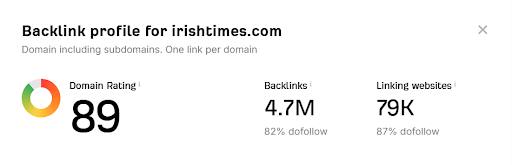
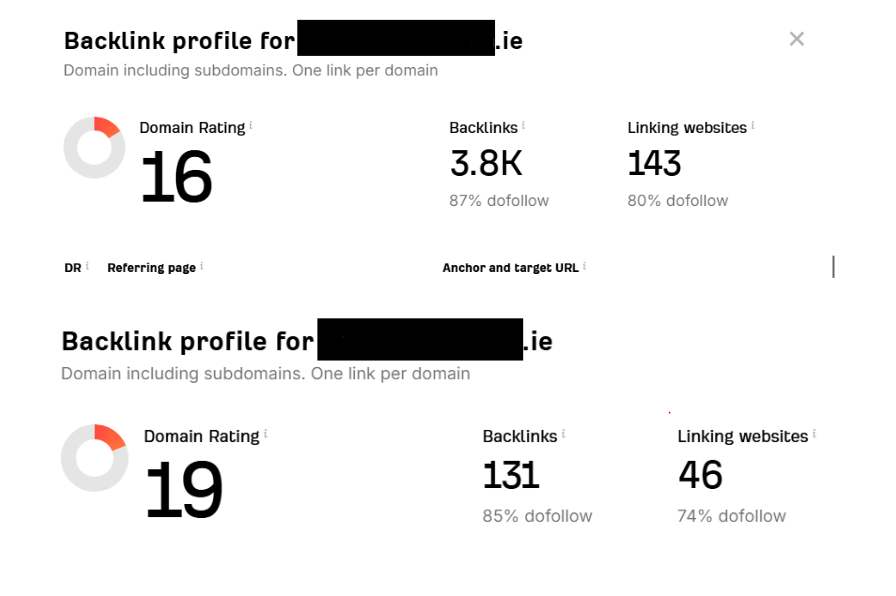
Getting a link from somewhere like The Irish Times or The New York Times is notoriously difficult. But there's a sweet spot: websites with a DR between 10 and 40 are achievable and still seriously valuable.
That's where we focus. Every month we secure high DR placements for our clients on established Irish websites, chosen for relevance and audited so they never put your site at risk.
For Irish businesses, this matters more
Your backlinks should come from Irish (.ie) websites in a relevant context, although relevant .com websites help too. A Dublin roofer getting a link from an Irish construction or home improvement blog is worth far more than 100 links from random sites in Russia, China or India.
Pace matters too
If your site has had no backlinks for years and suddenly gets 10 in a week, Google can flag it as unnatural and penalise you. Backlinks should be added gradually. We typically build 3 to 10 a month, depending on your existing profile and how competitive your industry is.
How many backlinks did they build for you last month, and which websites are they on? If they can't answer in detail, or they go quiet, that tells you everything.
Why some SEO campaigns cost €800 a month and others €2,500
Here's the part most agencies won't explain up front: the cost of an SEO campaign depends almost entirely on how competitive your keywords are. Not on how much profit the agency wants, and not on how fancy their dashboard is. It's competition.
And the place competition costs the most is backlinks.
What backlinks actually cost
A single decent backlink from a relevant, properly audited Irish website typically costs between €150 and €500. That's not the agency's markup, it's the cost of the link itself. The higher the authority, the more relevant the context and the harder it is to get, the higher the price. There are cheaper options, but they're almost always the spammy ones covered below.
How many you need depends on who you're up against
To rank number one, you generally need a backlink profile at least as strong as the site currently in first place.
"Roofers Dublin"
The top-ranking site might have 50 to 100 quality backlinks. To compete, you need a serious budget for months of steady, high-quality link building.
"Roofers [smaller town]"
The top-ranking site might have just 10 backlinks. You can realistically overtake it with a smaller, leaner campaign in less time.
This is the biggest reason SEO pricing varies so much. A roofer competing for "roofers Dublin" needs a completely different campaign to a roofer competing in a Kildare town. Same trade, very different amount of work.
So what's a realistic monthly budget?
For Irish trade and service businesses, we typically see:
Lower competition keywords, smaller towns and niche services. You're still building backlinks, publishing content and optimising, just at a sustainable pace.
Competitive cities like Dublin, Cork, Limerick and Galway for high-ticket trades such as roofers, builders, solar and extensions. A bigger link-building budget and more content.
Anyone charging far less than this is either cutting corners on backlinks, which means you won't rank, or buying cheap spammy ones, which means you'll get penalised. Either way, you'll have nothing to show for it after 12 months.
Ranking first for "roofers Dublin" is worth €5,000 to €6,000 a month in free clicks.A successful campaign pays for itself many times over, every month, for years.
Ask your agency to show you the backlink profile of the site ranking first for your main keyword. The number of quality backlinks it has should roughly match the size of the campaign you're being quoted. If your agency can't or won't do this, they're guessing your price.
Bad backlinks and SEO scams to watch for
Not all backlinks help. Many will actively hurt you. Buying a link from a website just because its authority score looks high is dangerous if nobody has audited it. If that site also links to casino or adult content, your site gets caught in Google's crosshairs.
Websites that sell thousands of backlinks usually end up with a high spam score, which damages every site they link to. And then there are the outright scammers.
"100,000 DA70 backlinks for $20"
Spammy websites with inflated authority scores, link farms and automated tools. Best case, you waste your money. Worst case, Google removes your site from its results.
One real link from a relevant Irish site
That will do more than a million spammy ones. Quality beats quantity every time. A handful of strong, relevant backlinks each month is what actually works.
The classic scam email
We get them every week. So do you. They usually look like this:

- "Re:" in the subject line to make you think you've spoken before.
- Offers like "1,000 backlinks for $1" or "guaranteed rankings on Google".
- Sent from names like "Vinay Sharma", "Sophia Web" or "Advika Ahaana", usually mass-sent from outside Ireland.
- Oddly specific promises about ranking your site within 30 days.
These scams prey on business owners who don't know how SEO works. They're sent in the millions every week, so even one reply makes them profitable.
The best case when you use these services is that you lose your money. The worst case is your site gets penalised or removed from Google entirely, and recovery can take months and a lot of money.
The reports you should be getting every month
A good SEO agency reports to you every month. Here's what should be in that report:
Your monthly SEO report checklist
- Every new backlink built that month, with the website it's on
- New pages or blog posts published on your site
- Existing pages that were updated or re-optimised
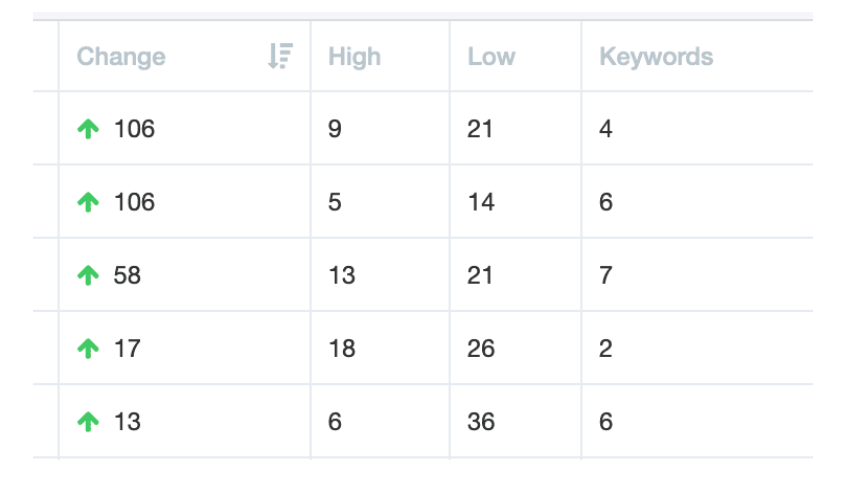
- Keyword ranking changes: what went up, what went down, what's new
- Which keywords are now on page 1, 2 or 3
- Total organic traffic for the month compared with the month before
If you're not getting all of this, ask why. A good SEO professional has nothing to hide. The more they show you, the more confidence you can have in them.
Local SEO: the most valuable spot on Google
Local SEO is the work of getting your business to appear in local Google searches. The big prize is the map pack, also called the local pack or 3-pack: the box at the top of the results with a map and three local businesses.
What the map pack looks like
When someone searches "roofer near me" or "driveway installer Dublin", Google shows three businesses on a map.
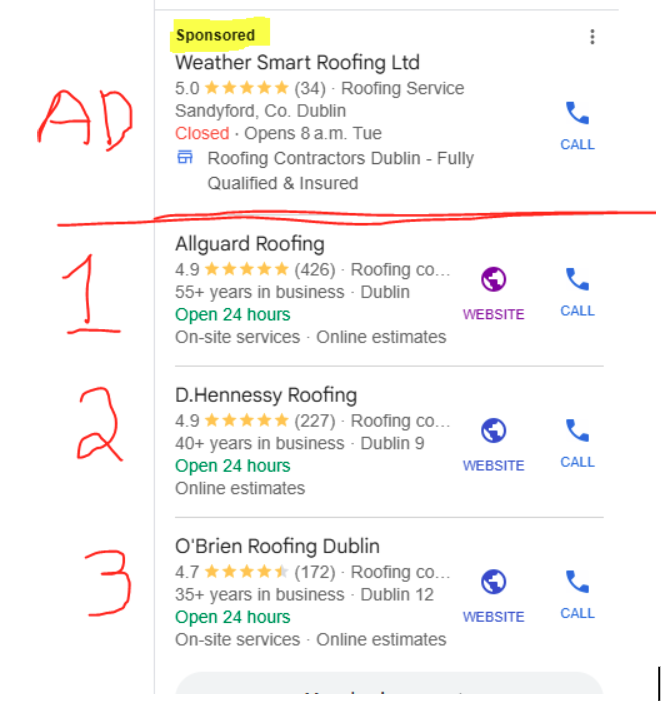
Each listing shows the business name, star rating and review count, address, phone number, opening hours and a short description. And it appears above the regular results.
Why the map pack matters more than anything
- Visibility. It's the first thing people see. If you're in it, you're in front of every searcher in your area.
- Buying intent. Someone searching "plumber near me" usually needs one now, not next week.
- Trust. Reviews and ratings are built in. A 4.8 rating with 200 reviews builds more credibility than any website.
- Clicks. Over 60% of clicks on local service searches go to the map pack, not the regular results.
Your Google Business Profile is not your website
This is the most misunderstood part of local SEO. Your map pack listing comes from your Google Business Profile, not your website. You can rank in the map pack with a terrible website, or with no website at all.
Ranks on content and links
Needs technical SEO, content, the right keywords and backlinks. Ranks in the regular results below the map.
Ranks on proximity and reputation
Needs accurate name, address and phone details, the right categories, photos, regular posts and steady reviews. Ranks in the map pack.
Your website is your home. The map pack is your shopfront on the busiest street in town.Both matter, but focus only on the website and the shopfront stays empty.
Most business owners pour all their effort into their website and leave their Google Business Profile half set up. That's leaving serious money on the table.
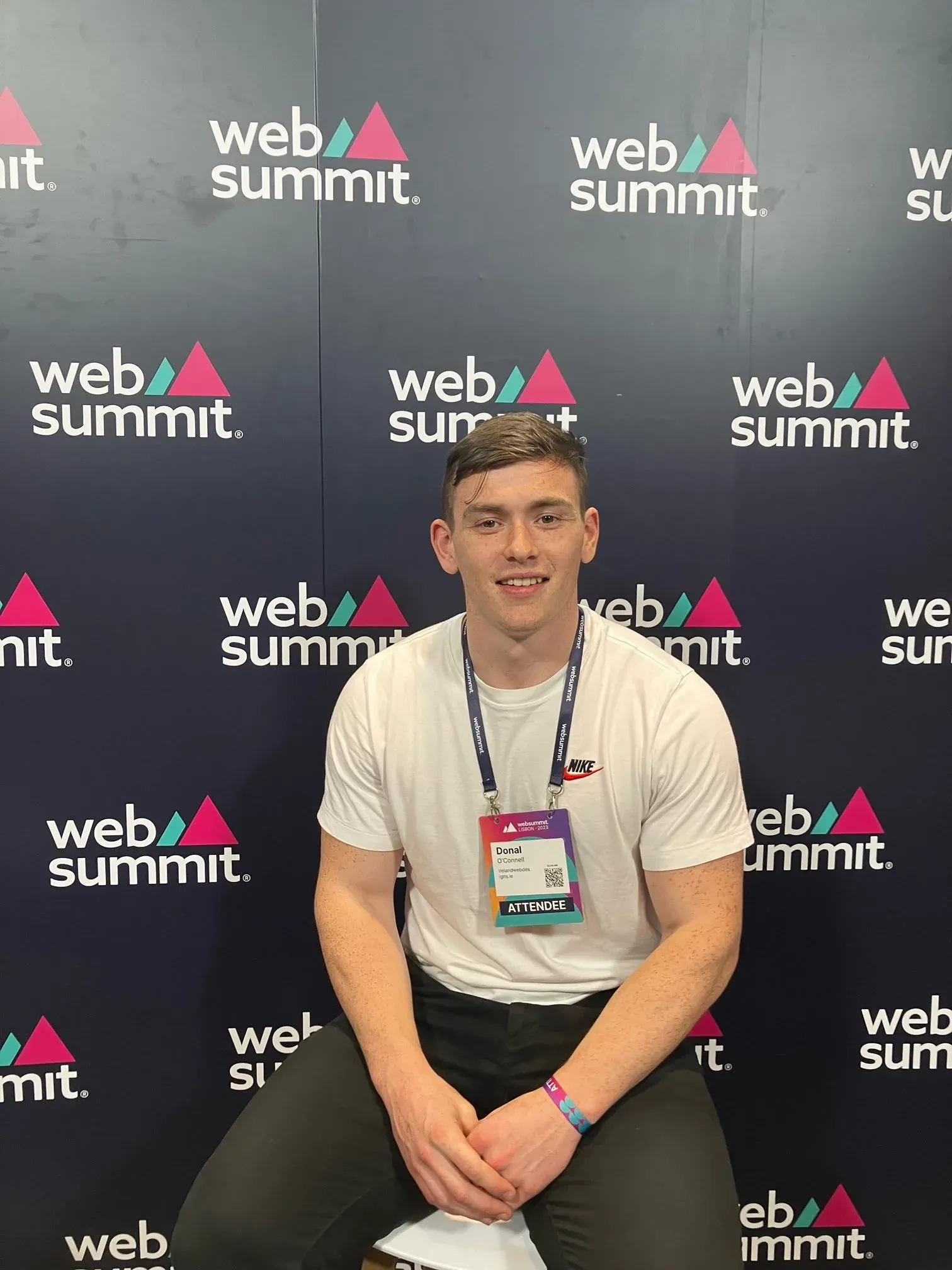
SEO and lead generation specialist based in Cork, focused on high-ticket local services. I help Irish trades, builders and service businesses turn Google into a steady source of new work. Everything on this page is written by me, from what I've seen working on real campaigns.